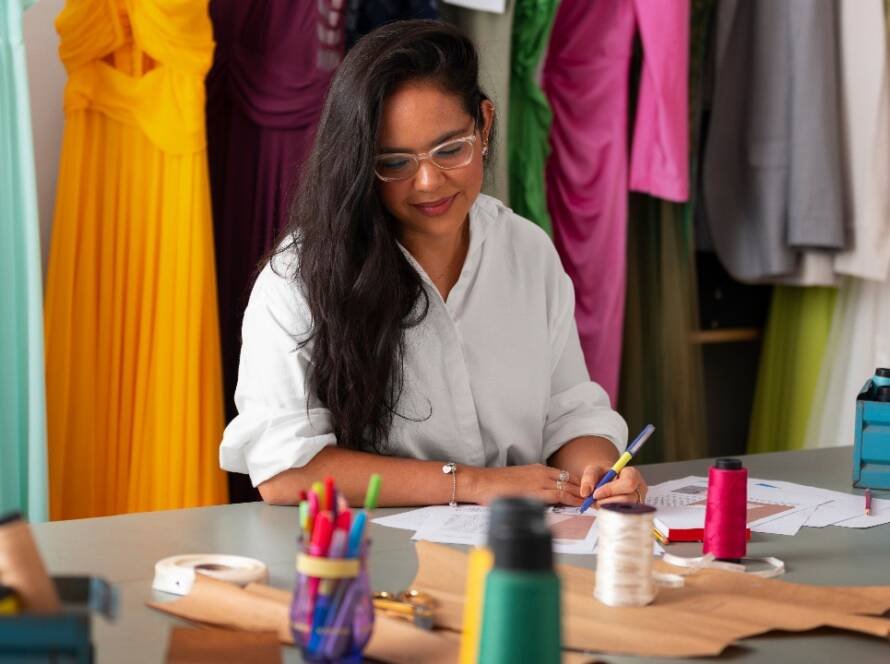


The fashion design trends in 2025 don’t really look like one big runway anymore. It feels more like a crossroads where technology, sustainability, identity, and creativity keep bumping into each other. If you’re studying fashion, this is the moment to pay attention.
This blog is going to talk about the key fashion trends shaping the year, and why they matter for you as a student.
1. Sustainability as part of the craft
Sustainability isn’t a side project now. It’s baked into almost every conversation in design studios and classrooms. Big brands are leaning into recycled fabrics, biodegradable materials, and transparent supply chains. That trickles down into the way students need to think, too.
It’s not just about choosing organic cotton or hemp. It’s about knowing how a piece will live, how it will be cared for, and what happens when it’s worn out. A jacket that can be repaired or taken apart and reused says as much about your skill as a perfectly finished hem. And sometimes those “green” constraints actually push your creativity further. Patchworked denim or modular silhouettes, for example, often stand out because they’re born from necessity.
2. Tech in the fabric itself
Tech in fashion isn’t sci-fi anymore. It’s real and, more importantly, wearable. Smart textiles that adjust to temperature or monitor health are already in play. They’re not perfect yet, but they’re moving past the gimmick stage.
As a student, even a basic understanding of conductive yarns or 3D printing can set you apart. Imagine experimenting with a dress that changes surface textures under different lights, or a bag with printed components tailored to the user. You don’t have to be an engineer, but knowing enough to talk to one could be a huge edge in your future career.
3. Digital fashion and virtual collections
Here’s something that sounded ridiculous five years ago: clothing that exists only online. Yet now, digital garments, 3D lookbooks, and avatar wardrobes are very much part of the landscape. They let designers test out ideas without cutting a single roll of fabric.
If you’re curious, learn a tool like CLO or Blender. Even one digital outfit in your portfolio shows you can play in both the physical and virtual worlds. The fun part? You can design beyond the limits of reality. Gravity-defying gowns, glowing fabrics, animated prints, things you’d never get away with in the real world.
4. Gender-neutral and inclusive design
Clothing that doesn’t fit into traditional “men’s” or “women’s” categories isn’t niche anymore. It’s growing steadily, and honestly, it feels overdue. More people want to dress in a way that simply feels like them, without the baggage of old labels.
For fashion design students, this means experimenting with silhouettes that look good on a range of bodies. Think adaptable fastenings, sizing systems that feel less rigid, or pieces designed to be shared across wardrobes. It’s not just a social shift, it’s a design challenge that pushes you to think differently about proportion and comfort.
5. Color, prints, and a bit of nostalgia
After years of beige and black dominating, 2025 is seeing color roar back. Bold pinks, electric blues, and even clashing prints are popping up everywhere. And along with that, a strong wave of nostalgia nods to the 90s, early 2000s, and even the odd 70s print, making a comeback.
For students, this is a license to go a little wild. Play with scale, test out digital printing, and combine patterns you wouldn’t normally pair. Even if it feels over the top, these experiments often lead to breakthroughs in your personal style language.
6. Personalization and made-to-order
One thing is clear: people want clothes that feel like theirs, not just in fit, but in story. The rise of customization, whether it’s virtual try-ons, tailored fits, or embroidered initials, shows no sign of slowing down.
As a student, knowing how to tweak patterns for bespoke fits or present a made-to-order option is incredibly valuable. Hybrid retail, where online and offline experiences blur together, is also opening new doors. Picture a customer scanning themselves with an app, ordering a design you created, and receiving something unique a week later.
That’s where things are heading, and it’s one of the most exciting fashion trends shaping the future of design. For fashion design students, mastering this approach to personalization is becoming a central part of modern fashion design trends.
7. A practical playbook for students
So, how do you actually prepare for all this? A few simple but effective steps:
- Mix it up. Have at least one physical mini-collection and one digital project in your portfolio.
- Learn a couple of tools outside the basics — CAD, a 3D program, maybe even a primer on smart textiles.
- Add a circular angle to at least one project: label where the fabric comes from, suggest how it can be repaired, or show what happens when it’s worn out.
- Don’t work in a bubble. Partner with tech students, or even people in business classes. You’ll learn how different minds approach the same problem.
- Document your process. Show your sketches, fabric tests, and even the failed prototypes. It proves you think like a real designer, not just a stylist.
Conclusion
Fashion in 2025 is exciting, messy, and more layered than ever. Students who pay attention to these fashion design trends will walk into the industry with a sharper edge. Whether you’re dreaming of launching a sustainable label, joining a tech-driven brand, or creating digital-only wardrobes, the opportunities are wide open.
In the end, the most valuable thing you can do is stay curious. Play, test, fail, adjust. The fashion trends shaping 2025 reward designers who are bold, thoughtful, and ready to bridge the gap between what we wear and what we imagine.