

Fashion design looks glamorous from the outside. The runway lights. The finished garments. The applause. But step a little closer and the picture changes. Behind every polished collection is a long stretch of learning, trial, frustration, and growth. That’s where fashion design skills really come into play. Talent helps, sure, but the designers who move faster are usually the ones who build strong fundamentals early and keep sharpening them with purpose.
This blog breaks down the essential abilities every aspiring designer needs and shows how to develop them without burning out or losing the joy of the process.
Creative Thinking and Visual Imagination
Every design starts quietly. Long before fabric is touched or measurements are taken. Ideas form while watching people walk, noticing how clothes fall, or spotting an unexpected colour pairing on the street.
This kind of thinking improves when curiosity becomes routine. Looking at vintage silhouettes, people watching at cafés, or flipping through old magazines can all feed the mind. Sketching often, even messy sketches, helps turn thoughts into shapes. These moments build creative skills slowly, almost without notice, and that’s usually when they stick best.
Drawing and Illustration That Communicates Ideas
Sketching isn’t about perfection. It’s about clarity. A good drawing explains a garment before a single stitch exists. Practice makes the difference here. Repeating figure sketches, copying garments from reference images, and redrawing the same design again and again builds confidence. Paper first, screens later. Over time, lines loosen. Proportions settle. The hand starts trusting itself. That’s usually when designers realise they’re quietly learning how to become a fashion designer, without even trying too hard.
Fabric Knowledge That Prevents Costly Mistakes
Fabric can make or break a design. A silhouette that looks flawless on paper can collapse completely with the wrong textile choice. Handling materials helps more than reading about them. Stretch them. Crush them. Wash them. See how they behave after a long day. Keeping small swatches with notes builds memory. Designers who understand textiles early rely less on guesswork and more on instinct, which is one of the most overlooked fashion design skills in the industry.
Pattern Making and Construction Where Ideas Get Real
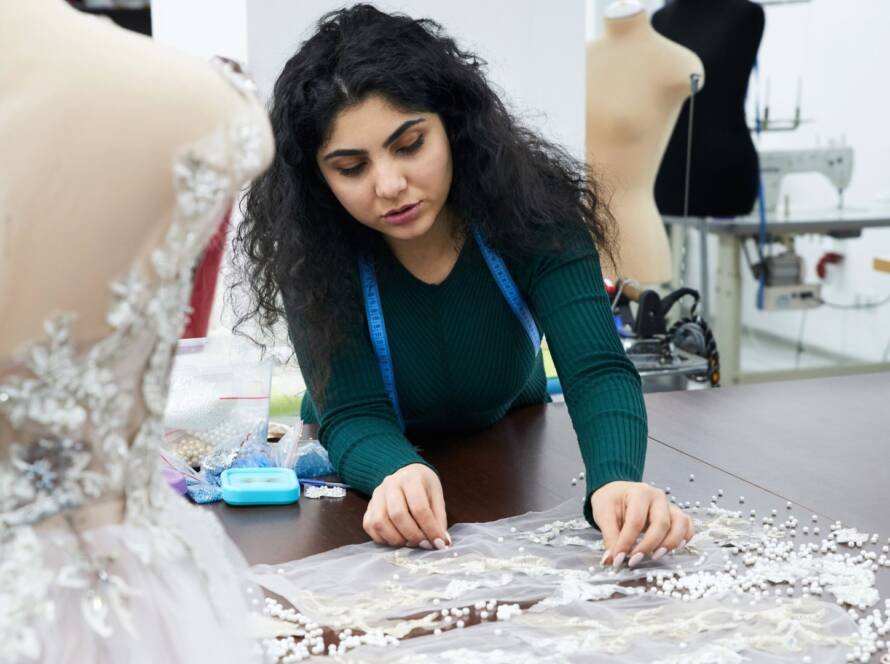
This is the stage where imagination meets reality. Patterns turn ideas flat, then garments bring them back to life. Mistakes matter here. Drafting simple patterns, stitching test pieces, and pulling them apart again teaches more than rushing to finish. Fit issues explain themselves when time is taken to listen. Starting small builds confidence. Confidence leads to better risks later. This phase often answers quiet questions about how to become a fashion designer in the real world.
The Power of Details and Finishing
Details rarely shout. They whisper. Seems that sit clean. Hems that fall just right. Closures that feel effortless. Studying well-made garments inside out sharpens the eye. Slowing down during the finishing stages changes everything. Rushing always shows. Over time, noticing small flaws becomes automatic. These moments quietly strengthen creative skills, turning average pieces into memorable ones.
Communication and Working With Others
Fashion doesn’t happen alone. Designers work with tailors, pattern makers, stylists, photographers, and clients. Clear communication keeps ideas intact. Explaining designs simply, using visual references, and staying open to feedback matter more than sounding impressive. Good communication often separates stressful projects from smooth ones. Designers who express ideas clearly usually see their work executed closer to the original vision. This balance is another layer of fashion design skills that often gets underestimated.
Business Awareness That Supports Longevity
Creativity needs structure to survive. Deadlines, costing, and planning shape long-term growth. Learning pricing basics, managing time, and understanding client expectations early prevents burnout later. Even artistic freedom feels lighter with boundaries. This knowledge answers practical questions about how to become a fashion designer without losing momentum.
How These Skills Come Together
Trying to master everything at once rarely works. Focus speeds things up. Choosing one area to improve while staying aware of the rest keeps progress steady. Some days feel productive. Others feel slow. Both count. Skill growth isn’t linear, and that’s normal. Each mistake, adjustment, and small win adds up, strengthening both technique and creative skills along the way.
Conclusion
Becoming a confident designer isn’t about one standout talent. It’s about building balance. Drawing, fabric knowledge, construction, communication, and discipline support each other quietly. When these abilities grow together, fashion design skills feel less overwhelming and more natural. And with steady practice, patience, and the right guidance, the path forward becomes clearer, step by step.
Institut de Silhouette helps aspiring designers build these essential skills through structured learning and hands-on training. It’s a place where creativity meets technique, and passion turns into a profession with purpose.